




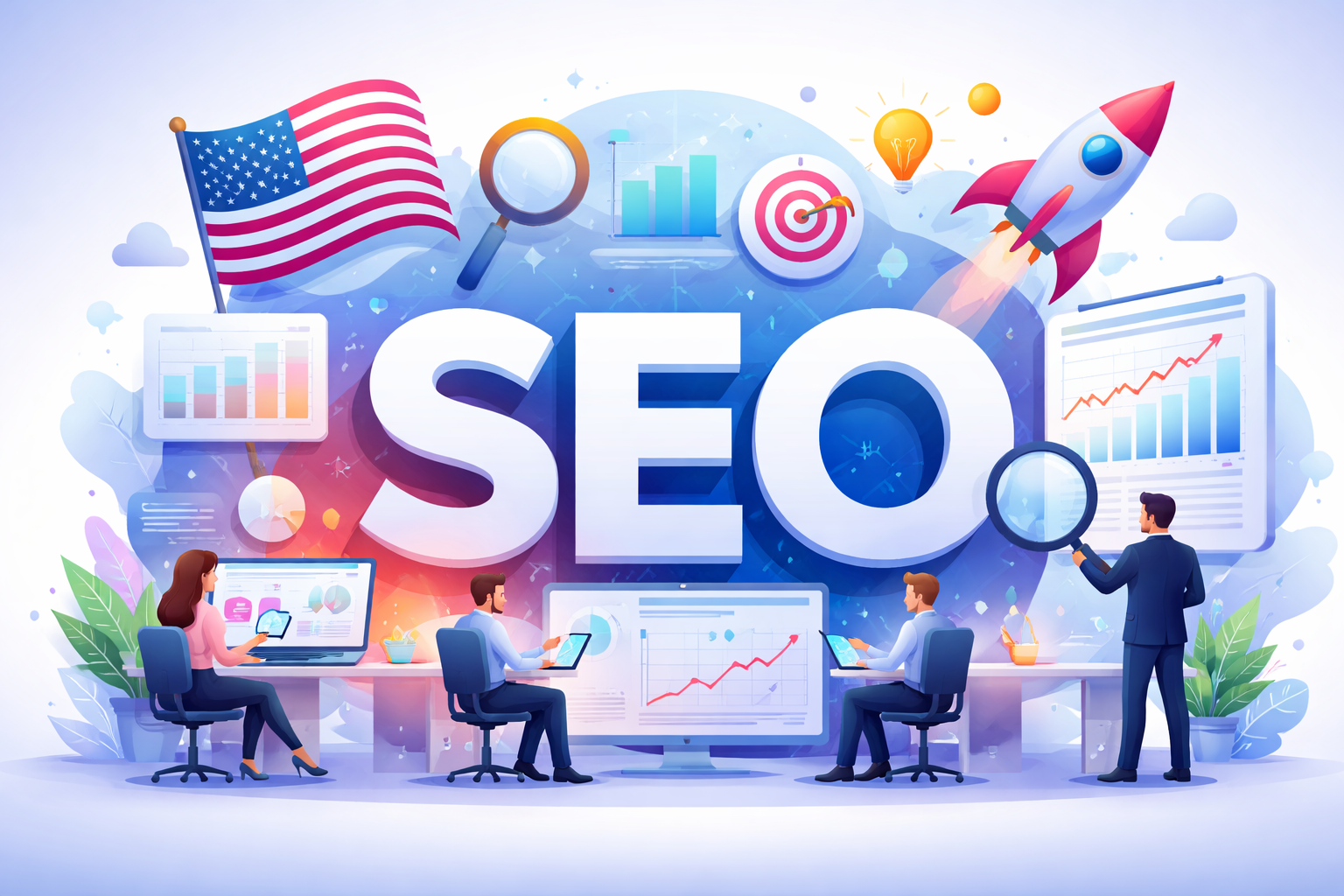
In today’s fast-paced digital world, search engine optimization (SEO) has become a cornerstone for businesses looking to succeed online. As USA brands continue to grow and expand, the competition for visibility in search engine results is more intense than ever. Whether you’re running a small local business or a large national brand, understanding SEO essentials is crucial for driving organic traffic, improving brand visibility, and increasing conversions.
In this blog, we will cover the SEO essentials that USA brands need to know to improve their online presence, drive traffic, and achieve higher rankings on search engine results pages (SERPs).
What is SEO and Why Does It Matter for USA Brands?
SEO stands for Search Engine Optimization, and it refers to the process of optimizing a website to rank higher in search engine results for specific keywords or phrases. When executed properly, SEO can help your website appear in front of the right audience, increase organic traffic, and boost brand visibility without the need for paid advertising.
For USA brands, SEO is especially important because of the highly competitive online landscape. Businesses must optimize their websites to appear at the top of search results for relevant queries to stand out from their competitors. When done right, SEO can drive significant traffic to your site, improve user experience, and ultimately increase conversions and sales.
SEO Essentials for USA Brands: Key Elements to Focus On
1. Keyword Research: The Foundation of SEO Strategy
One of the most important aspects of SEO is keyword research. Without understanding the keywords your target audience is searching for, your efforts may be in vain. By conducting in-depth keyword research, you can identify the most relevant search terms and phrases that will drive the right kind of traffic to your website.
For USA brands, it’s essential to focus on both short-tail and long-tail keywords. Short-tail keywords are broad and often highly competitive, while long-tail keywords are more specific and less competitive. For example, a short-tail keyword for a furniture company in the USA might be “furniture,” while a long-tail keyword might be “modern wooden furniture for small apartments in the USA.”
Here are some tips for effective keyword research:
Use tools like Google Keyword Planner, Ahrefs, or SEMrush to identify relevant keywords.
Focus on the search intent behind each keyword (e.g., informational, transactional, or navigational).
Analyze your competitors to find opportunities for ranking higher for specific keywords.
2. On-Page SEO: Optimizing Your Website Content
On-page SEO refers to the practice of optimizing individual pages on your website to rank higher in search engine results. This includes optimizing both the content and the HTML source code of each page. Proper on-page SEO is critical for ensuring that search engines understand the content of your pages and can index them correctly.
Key on-page SEO factors to focus on include:
Title Tags: The title tag is one of the most important on-page SEO elements. It should be descriptive, concise, and include the main keyword for the page. For example, a title tag for a USA brand offering digital marketing services might be “Top Digital Marketing Services for USA Brands | Liss Solutions.”
Meta Descriptions: The meta description is a short summary of the page content that appears below the title in search engine results. It should include the main keyword and a call to action to encourage users to click through to your website.
Headings (H1, H2, H3): Use headings to structure your content and make it easier to read. The H1 tag should include your primary keyword, and H2 and H3 tags should break the content into sections that are relevant to secondary keywords.
Content Optimization: Your website content should be high-quality, informative, and engaging. It should answer the questions and concerns of your target audience while naturally incorporating relevant keywords. However, avoid keyword stuffing, as it can harm your rankings. Instead, focus on providing value to your audience.
Image Alt Text: Search engines can’t read images, so it’s important to include descriptive alt text for each image on your site. This helps search engines understand the context of the image and improves accessibility for users with visual impairments.
Internal Linking: Link to other relevant pages on your website to help users navigate and discover more content. This also helps search engines crawl your website more effectively.
3. Mobile Optimization: A Must-Have for USA Brands
In today’s mobile-first world, optimizing your website for mobile devices is no longer optional; it’s essential. With more users accessing websites via smartphones and tablets, Google has shifted to mobile-first indexing. This means Google primarily uses the mobile version of your website for ranking purposes.
To ensure your website is mobile-friendly, consider the following:
Responsive Design: Ensure that your website design adjusts automatically to different screen sizes and devices.
Fast Load Times: Mobile users expect websites to load quickly. Aim for a load time of 3 seconds or less.
Touch-Friendly Navigation: Ensure that your site’s navigation is easy to use on a mobile device with large, clickable buttons and menus.
4. Technical SEO: Enhancing Website Performance
Technical SEO focuses on improving the technical aspects of your website to help search engines crawl and index your content effectively. While it may not be as visible to your users, technical SEO is crucial for ensuring that your website performs well in search rankings.
Key technical SEO factors to address include:
Site Speed: A slow website can hurt your rankings and increase bounce rates. Use tools like Google PageSpeed Insights to identify and fix speed issues.
XML Sitemap: An XML sitemap helps search engines discover and index all the important pages on your website.
SSL Certificate: Ensure your website is secure by implementing HTTPS. Google uses HTTPS as a ranking factor, so having a secure site is essential for SEO.
Robots.txt: Use the robots.txt file to tell search engines which pages they can and cannot crawl. This helps prevent duplicate content and ensures that search engines focus on the most important pages.
Structured Data (Schema Markup): Implement schema markup to help search engines understand the content on your website better. This can lead to rich snippets in search results, which improve click-through rates.
5. Link Building: Strengthening Your Online Authority
Link building is one of the most powerful SEO strategies for increasing your website’s authority and ranking. Search engines use backlinks (links from other websites to yours) as a signal of trust and credibility. The more high-quality backlinks your site has, the more likely it is to rank higher.
For USA brands, link building can be particularly challenging, but there are several effective strategies to consider:
Guest Blogging: Write informative, high-quality blog posts for reputable websites in your industry. In exchange, you can include a link back to your site.
Content Marketing: Create shareable, valuable content such as infographics, case studies, or white papers that naturally attract backlinks.
Broken Link Building: Find broken links on other websites in your industry and offer your content as a replacement.
Local Directories: Submit your website to relevant local directories, such as Yelp, BBB, and local Chamber of Commerce sites, to improve local SEO and gain quality backlinks.
6. Local SEO: Targeting USA Audiences
For USA brands that serve specific geographic locations, local SEO is a crucial component of your overall SEO strategy. Local SEO helps you rank higher in search results when users are searching for businesses in your area.
Key local SEO tips include:
Google My Business (GMB): Claim and optimize your Google My Business listing. Ensure that your business name, address, phone number, and hours are accurate and up-to-date.
Local Keywords: Use location-specific keywords on your website to target users in your city, state, or region.
Local Citations: Ensure your business is listed consistently across relevant local directories.
Online Reviews: Encourage customers to leave reviews on Google and other review platforms. Positive reviews not only improve your reputation but also contribute to your local SEO efforts.
Conclusion
SEO is a complex and ever-evolving process, but by focusing on the essentials outlined in this blog, USA brands can significantly improve their online presence and achieve higher rankings in search results. Whether you’re just starting with SEO or looking to enhance your existing strategy, focusing on keyword research, on-page SEO, mobile optimization, technical SEO, link building, and local SEO will help you dominate the digital landscape.
At Liss Solutions, we specialize in helping USA brands succeed online by implementing effective SEO strategies that drive traffic and increase conversions. If you’re ready to take your online presence to the next level, email us at info@lisssolutions.com or visit our contact page to get started.
2 Comments
lasix generic
lasix generic
remeron generico
remeron generico