




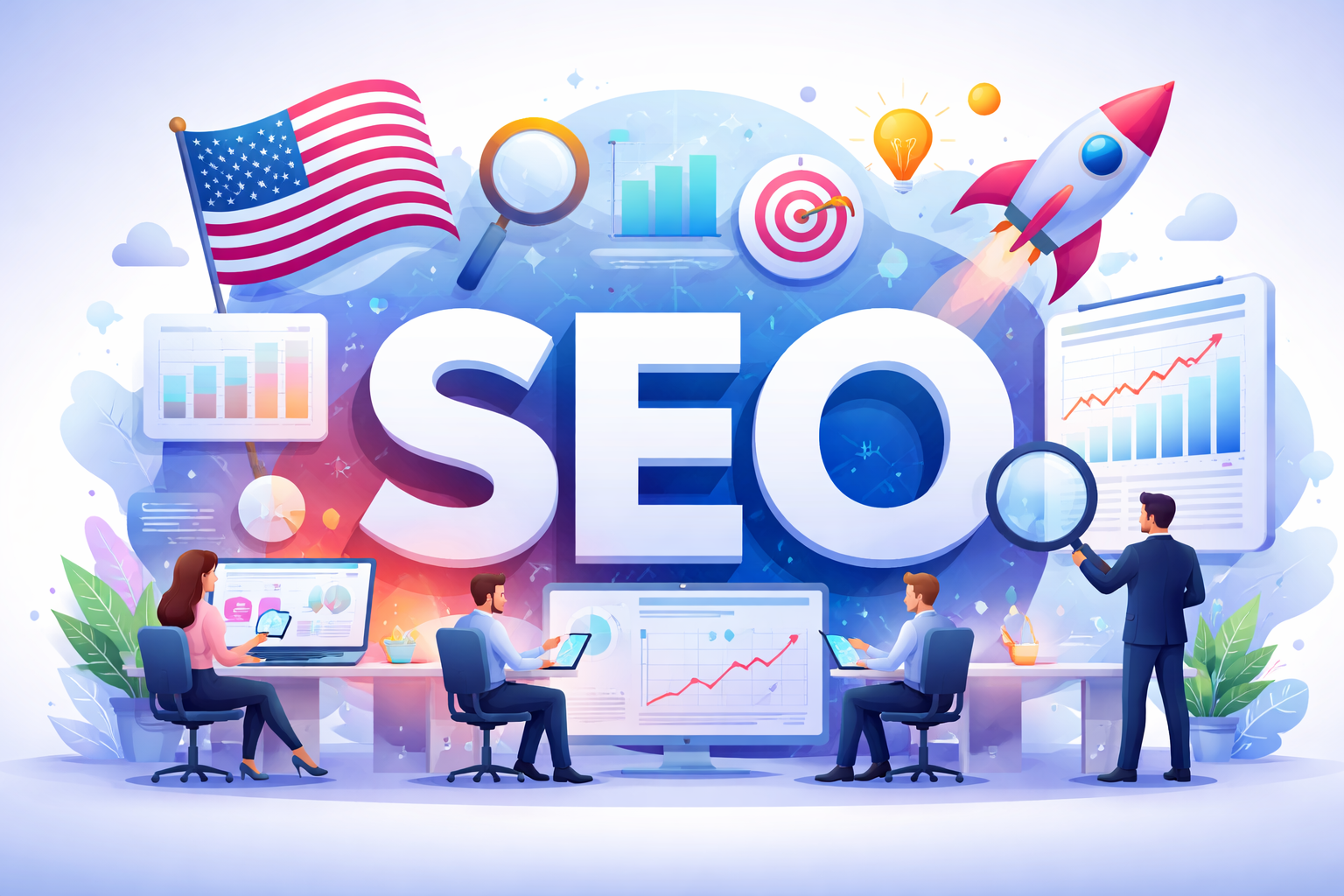
In today’s digital age, Search Engine Optimization (SEO) has become a vital part of any business’s digital marketing strategy, particularly in the USA. The vast and competitive nature of the internet means that businesses must understand and adapt to the ever-changing SEO landscape to stand out. Whether you’re a startup or an established company, staying ahead of SEO trends can make a significant difference in your online visibility, organic traffic, and overall business success.
This blog will explore the intricacies of the USA SEO landscape, the importance of adapting to SEO strategies, the evolving role of algorithms, and how businesses can leverage SEO to enhance their online presence.
The Importance of SEO in the USA
SEO, at its core, is about optimizing your website to make it more appealing to search engines. In the USA, the SEO landscape is especially competitive, with millions of businesses vying for attention. Search engines like Google dominate the space, accounting for over 90% of the search engine market share in the USA. As a result, businesses need to craft effective SEO strategies to remain visible and competitive.
SEO’s importance can be summarized as follows:
Increased Visibility: Optimizing your website for search engines increases your chances of appearing on the first page of search results. Since most users rarely venture beyond the first page, ranking high is crucial for visibility.
Better User Experience: Search engines prioritize websites that provide a seamless, fast, and user-friendly experience. Implementing SEO practices, such as improving site speed, making mobile-friendly adjustments, and optimizing content, leads to a better overall user experience.
Higher Conversion Rates: A well-optimized website often results in higher conversion rates. SEO techniques like keyword targeting, optimizing for local search, and improving your website’s call-to-action (CTA) buttons can guide users toward taking desired actions, such as making a purchase or filling out a contact form.
Cost-Effective Marketing: SEO is one of the most cost-effective marketing strategies available. Unlike paid advertising, which requires continuous investment, a solid SEO strategy can provide long-term, organic traffic without the need to pay for each click.
Competitive Edge: With businesses increasingly investing in SEO, not optimizing your website for search engines means you’re leaving potential traffic on the table. By actively focusing on SEO, you can gain an edge over your competitors.
Understanding the Evolving SEO Trends in the USA
The SEO landscape is constantly evolving, driven by technological advancements, search engine algorithm updates, and changes in user behavior. Businesses must stay up-to-date with these changes to remain relevant and competitive in the market. Below are some of the key SEO trends shaping the USA SEO landscape.
1. Mobile-First Indexing
With the rise of smartphones and tablets, Google has moved to mobile-first indexing, meaning that Google primarily uses the mobile version of a website for ranking and indexing. This shift has made it crucial for businesses to optimize their websites for mobile users. A responsive design that ensures your website is mobile-friendly is no longer optional; it’s a necessity.
2. Voice Search Optimization
Voice search has become increasingly popular, with more users turning to voice assistants like Siri, Google Assistant, and Alexa for their queries. In fact, it’s estimated that by 2026, over 50% of searches will be voice-activated. This trend requires businesses to rethink their SEO strategies to accommodate conversational keywords and long-tail phrases that align with how people speak.
3. Local SEO
Local SEO has gained immense importance, especially for businesses targeting specific geographical areas. According to recent statistics, nearly 46% of all searches on Google are looking for local information. Optimizing your website for local search terms, claiming your Google My Business listing, and getting listed in local directories are all crucial steps in improving your local SEO.
4. User Experience (UX) Signals
Google has increasingly emphasized user experience (UX) as a ranking factor. Websites that provide poor user experiences, such as slow loading speeds, intrusive pop-ups, or hard-to-navigate designs, are likely to be penalized. On the other hand, websites with intuitive designs, fast loading times, and easy-to-find content tend to rank better. Key UX factors include page load speed, mobile optimization, clear navigation, and engaging content.
5. Featured Snippets and Structured Data
Featured snippets are becoming an essential aspect of SEO. These are the boxed results that appear at the top of the search engine results page (SERP) and provide quick answers to user queries. To optimize for featured snippets, businesses must structure their content with clear headings, bullet points, and direct answers to commonly asked questions. Implementing schema markup (structured data) can help Google better understand your content and improve your chances of appearing in featured snippets.
6. E-A-T: Expertise, Authority, and Trustworthiness
E-A-T (Expertise, Authority, and Trustworthiness) is a key component of Google’s search algorithms, especially for websites in industries like health, law, and finance. Google evaluates the quality of content based on these factors, meaning that websites must provide authoritative, well-researched, and reliable information to rank well.
Best Practices for Navigating the USA SEO Landscape
To successfully navigate the USA SEO landscape, businesses must adopt a comprehensive SEO strategy that covers multiple aspects of search engine optimization. Here are some best practices for improving your SEO performance in the USA.
1. Keyword Research
Effective keyword research is the foundation of any successful SEO strategy. Identify the keywords and phrases your target audience is searching for, and incorporate them naturally into your content. Tools like Google Keyword Planner, Ahrefs, and SEMrush can help you discover high-traffic keywords with low competition.
Focus on long-tail keywords, as they are often more specific and less competitive. They also align better with voice search and conversational queries.
2. On-Page SEO Optimization
On-page SEO refers to optimizing elements on your website to make them more search-engine-friendly. Key areas to focus on include:
Title Tags: Ensure that your title tags are concise, relevant, and include your target keywords.
Meta Descriptions: Write compelling meta descriptions that summarize the page’s content and include keywords.
URL Structure: Use clean, descriptive URLs that include keywords.
Content Optimization: Create high-quality, informative content that addresses the needs of your audience. Ensure that your content includes relevant keywords, proper header tags (H1, H2, etc.), and internal links.
Image Optimization: Compress images to improve load times and use descriptive alt text for better accessibility and SEO.
3. Technical SEO
Technical SEO focuses on the backend elements of your website that affect its performance and visibility. Ensure that your website is fast, mobile-friendly, and easy to crawl by search engines. Key technical SEO practices include:
Website Speed: Use tools like Google PageSpeed Insights to check and improve your website’s load time.
Mobile Optimization: Ensure your website is responsive and performs well on all devices.
XML Sitemap: Submit an XML sitemap to Google Search Console to help search engines crawl your website more efficiently.
Fix Broken Links: Regularly check for and fix broken links that could harm your site’s SEO.
4. Quality Backlink Building
Backlinks (links from other websites to yours) are one of the most important ranking factors for SEO. However, not all backlinks are created equal. Focus on acquiring high-quality backlinks from authoritative websites in your industry. Avoid black-hat techniques like buying links, as they can result in penalties from search engines.
5. Content Marketing
Content marketing plays a significant role in SEO. By creating valuable, informative, and engaging content, you can attract organic traffic and build credibility. Focus on creating blog posts, articles, infographics, and videos that address common questions or problems your audience faces.
6. Tracking and Analytics
Tracking and analyzing your SEO efforts is essential for long-term success. Use tools like Google Analytics and Google Search Console to monitor your website’s performance, track keyword rankings, and identify areas for improvement. Regularly check your analytics to see which strategies are working and adjust your tactics accordingly.
The Future of SEO in the USA
The future of SEO in the USA will likely involve further advancements in AI, voice search, and automation. With AI-powered tools like Google’s RankBrain and BERT, search engines are becoming better at understanding context and user intent. Businesses must stay ahead of these trends by optimizing for emerging technologies and focusing on user experience.
Conclusion
Navigating the USA SEO landscape can be challenging, but with the right strategies and practices, businesses can thrive in an increasingly competitive environment. By focusing on mobile-first indexing, voice search optimization, quality content, and technical SEO, businesses can significantly improve their online visibility and drive more traffic to their websites.
At Liss Solutions, we specialize in providing SEO services tailored to your unique business needs. Our team of experts stays up-to-date with the latest trends and strategies to ensure your website achieves top rankings in the competitive USA market.
If you’re ready to enhance your online presence and dominate the search rankings, contact us today. Email us at info@lisssolutions.com or visit our contact page to get started.
2 Comments
ivermectin for sale
ivermectin for sale
zoloft ssri
zoloft ssri