




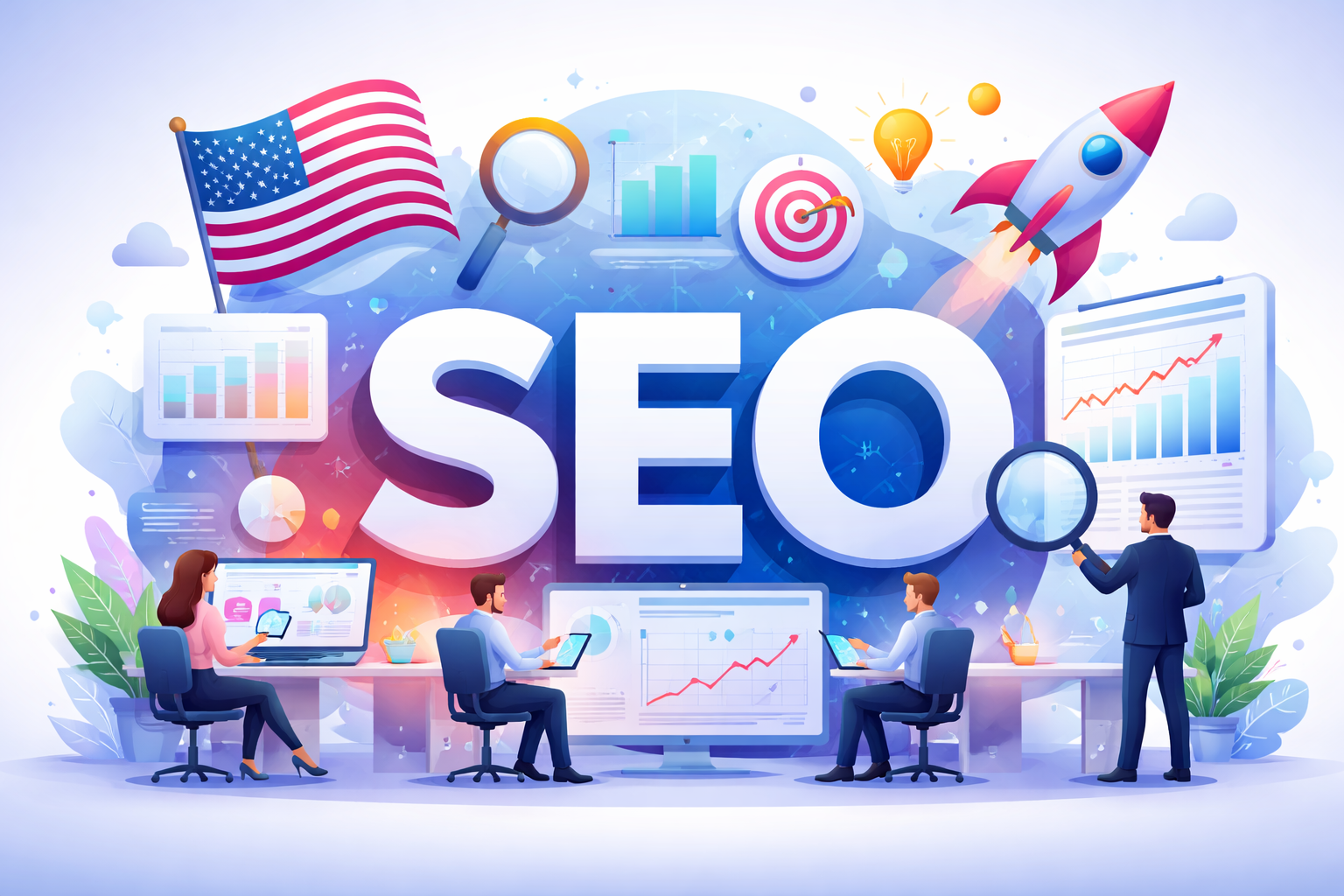
In today’s fast-paced digital world, having a strong online presence is essential for businesses to stand out and thrive. One of the most effective ways to achieve this is through Search Engine Optimization (SEO). But what exactly does SEO entail, and why is mastering SEO for the USA market crucial for your business? In this blog, we will break down the importance of SEO, key strategies for success, and how you can harness the power of SEO to drive traffic, increase visibility, and ultimately grow your business in the USA.
Understanding SEO and Its Importance
SEO, or Search Engine Optimization, is the process of optimizing your website so that it ranks higher in search engine results pages (SERPs) for specific keywords. When someone types a query into a search engine like Google, the goal of SEO is to ensure your website appears at the top of the list. Ranking higher in search results increases the chances of people clicking on your website, which in turn boosts your website’s traffic, brand awareness, and potential leads.
For businesses in the USA, mastering SEO is essential because:
Increased Visibility: The more visible your website is in search engines, the more opportunities you have to attract potential customers. Most users don’t go past the first page of search results, so ranking highly on Google is key.
Targeted Traffic: SEO helps you attract the right kind of traffic. By optimizing for keywords relevant to your business and audience, you ensure that the visitors who land on your site are interested in what you offer.
Cost-Effectiveness: Compared to paid advertising, SEO provides long-term benefits. It’s a cost-effective way to drive organic traffic without constantly spending money on ads.
Builds Credibility and Trust: Websites that rank higher are often viewed as more credible and trustworthy by users. SEO helps improve user experience and ensures that your website meets the standards search engines set.
Key SEO Strategies for Success in the USA Market
Mastering SEO requires a combination of several strategies that, when implemented correctly, can significantly improve your website’s ranking. Here are some of the most important tactics to focus on when trying to master SEO for the USA market:
1. Keyword Research: The Foundation of SEO
Effective SEO starts with thorough keyword research. Keywords are the search terms that users enter into search engines, and targeting the right ones is essential for driving relevant traffic to your website.
In the USA, keyword research can be slightly different from international SEO, as the language, colloquialisms, and preferences vary regionally. Here’s how to do it right:
Use Keyword Research Tools: Tools like Google Keyword Planner, Ahrefs, and SEMrush help you find high-traffic keywords related to your business. Look for a balance between high search volume and low competition.
Focus on Local Keywords: If your business operates in a specific region or city in the USA, make sure to target location-based keywords. For example, if you are a law firm in New York, terms like “New York personal injury lawyer” or “best lawyer in New York” are highly relevant.
Long-Tail Keywords: These are more specific, longer phrases that are often less competitive and can attract more targeted visitors. For instance, “affordable web design in Los Angeles” may convert better than just “web design.”
2. On-Page SEO: Optimizing Your Website’s Structure and Content
On-page SEO refers to the changes you make on your website to improve its search engine rankings. Here are some of the most effective strategies:
Optimize Title Tags and Meta Descriptions: These elements tell search engines what your page is about and should include relevant keywords. Make sure every page on your site has a unique title tag and meta description.
Optimize Heading Tags (H1, H2, etc.): Break your content into sections with relevant headings. Include your target keywords in these headings to help search engines understand the structure and relevance of your content.
Internal Linking: Link related content within your website to improve navigation and help search engines discover all of your pages. This also keeps visitors on your site longer, reducing bounce rates.
URL Structure: Use clear, concise, and keyword-rich URLs. For example, instead of “www.yoursite.com/page1,” use “www.yoursite.com/mastering-seo-for-usa.”
Alt Text for Images: Search engines can’t “see” images, so alt text helps them understand the content of images. Include relevant keywords in your image alt tags.
3. Quality Content: Engaging, Relevant, and Valuable
One of the most important aspects of SEO is producing high-quality, valuable content. Search engines prioritize websites that provide the best answers to users’ queries. To improve your rankings, you need to consistently create engaging and relevant content for your audience.
Content that Solves Problems: Your content should address the pain points of your audience. Whether it’s a blog, case study, or product page, ensure it answers the questions or concerns that your target audience has.
Long-Form Content: Google tends to favor long-form content that provides in-depth coverage of a topic. Aim for content that’s at least 1,000-1,500 words long. This allows you to cover all aspects of a subject and use more keywords naturally.
Use Multimedia: Incorporate videos, images, and infographics to make your content more engaging. Google also ranks pages with multimedia higher than those with only text.
Content Freshness: Regularly update your content to keep it fresh and relevant. This tells Google that your website is actively maintained and offers the latest information.
4. Mobile Optimization: Catering to the Majority of Users
With mobile internet traffic now surpassing desktop traffic, optimizing your website for mobile is essential. A mobile-friendly website not only provides a better user experience but is also a ranking factor for Google. Here’s what you should focus on:
Responsive Design: Ensure your website is responsive and adapts to various screen sizes. This improves usability on smartphones and tablets.
Fast Loading Speed: Mobile users are often on-the-go and don’t have the patience for slow-loading websites. Use tools like Google PageSpeed Insights to test and improve your site’s loading speed.
Optimized Images: Large images can slow down your website, especially on mobile devices. Compress images without sacrificing quality to improve page load times.
5. Local SEO: Targeting the USA Market Effectively
If you’re a business targeting customers in the USA, local SEO is vital. Local SEO helps your business show up in searches for location-based queries, which is especially important for small and medium-sized businesses.
Google My Business (GMB): Claim and optimize your GMB listing. Ensure your business name, address, phone number (NAP), and hours of operation are accurate. Encourage satisfied customers to leave reviews to increase your credibility.
Local Listings: Ensure your business is listed in relevant local directories and industry-specific websites. Consistency in NAP across the web improves local SEO.
Local Content: Create content that resonates with your local audience. This can include blog posts or events that highlight your business’s presence in the USA.
6. Backlink Building: Boosting Authority and Credibility
Backlinks are links from other websites to your own. They act as “votes of confidence,” signaling to search engines that your content is trustworthy and authoritative. Here’s how to build high-quality backlinks:
Guest Blogging: Write high-quality guest posts for authoritative websites in your industry. This helps you gain backlinks and increase your visibility.
Content Promotion: Promote your content on social media and reach out to influencers or journalists who may link to it in their articles.
Skyscraper Technique: Find top-ranking content in your niche and create something better. Reach out to the people linking to the original content and ask them to link to your superior version.
7. Technical SEO: Ensuring Your Website Is Search Engine Friendly
Technical SEO is about optimizing your website’s backend to make it easier for search engines to crawl and index your site. Key technical SEO factors include:
XML Sitemap: Ensure your website has an XML sitemap that helps search engines understand its structure.
Robots.txt: This file tells search engines which pages to crawl and which to ignore. Make sure it’s set up correctly.
Secure Website (HTTPS): Google gives preference to secure websites. Ensure your website has an SSL certificate.
Fix Broken Links: Regularly check for and fix any broken links on your website. Broken links negatively affect user experience and SEO.
Conclusion
Mastering SEO for the USA market requires a combination of strategic planning, high-quality content, technical optimization, and local SEO techniques. By implementing these strategies, you can significantly improve your website’s visibility, attract more relevant traffic, and grow your business. As the competition grows, SEO remains one of the most cost-effective and sustainable methods to ensure your website gets noticed.
If you’re ready to take your website’s SEO to the next level, Liss Solutions is here to help! Our expert team can guide you through every step of the process to ensure your website is optimized for success in the USA market.
Contact us today at info@lisssolutions.com
7 Comments
prinivil
prinivil
reglan for nausea
reglan for nausea
diflucan medication
diflucan medication
linezolid
linezolid
tetracycline hydrochloride ointment
tetracycline hydrochloride ointment
dutasteride topical solution
dutasteride topical solution
cost of doryx
cost of doryx