




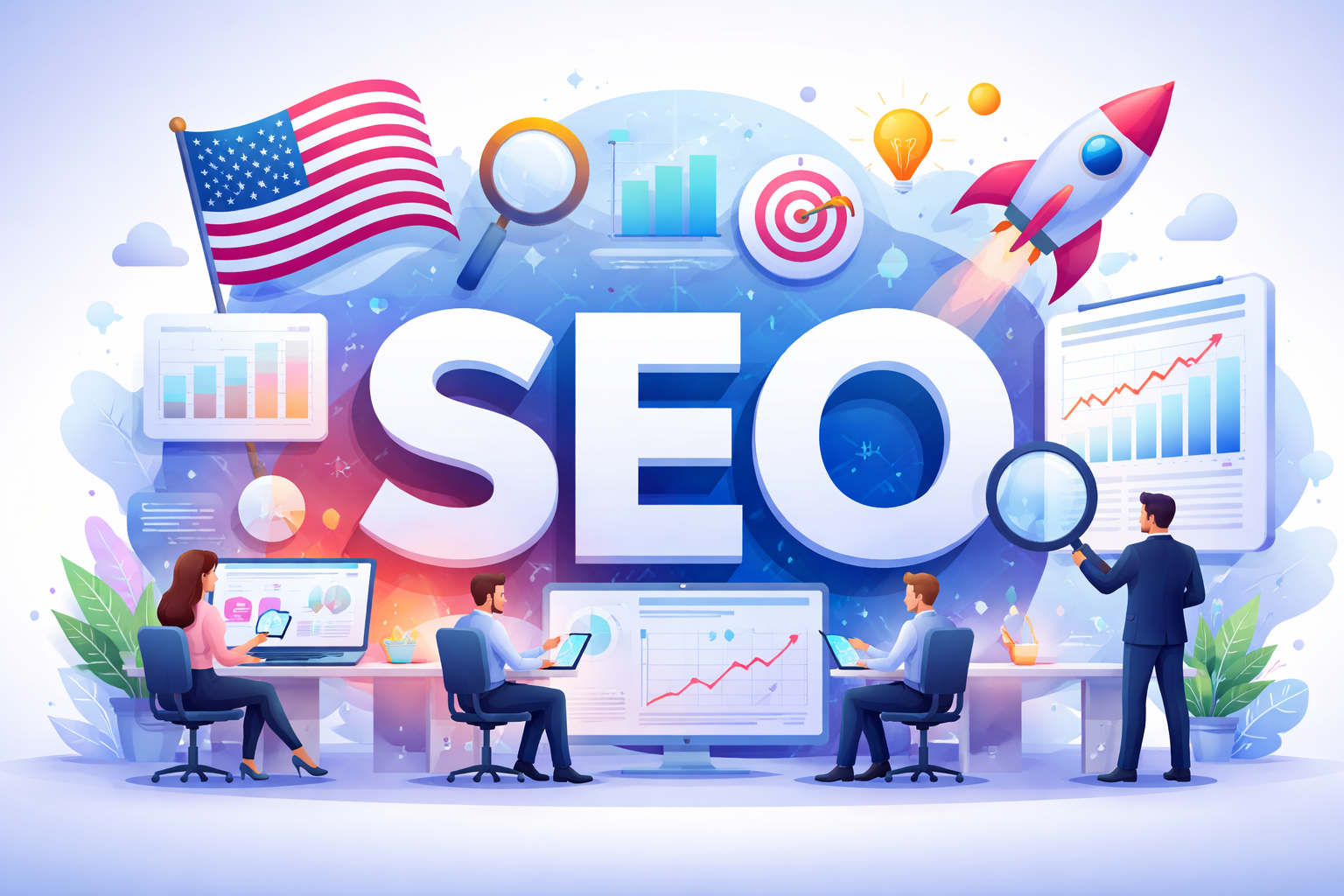
In the digital age, Search Engine Optimization (SEO) is one of the most critical strategies for any business looking to succeed online. As businesses in the USA and beyond continue to compete for visibility, achieving SEO success can make the difference between thriving and simply surviving. The goal is not just to rank high on Google but to unlock the full potential of SEO to grow your online presence, attract more customers, and ultimately drive revenue.
In this blog, we will guide you through the essential steps to unlocking USA SEO success, focusing on strategies, tools, and techniques that can help businesses in the USA achieve long-term online growth. Whether you’re a startup or an established enterprise, these tactics will help you achieve your SEO goals.
What is SEO and Why Does It Matter for Your Business?
SEO refers to the process of optimizing your website to rank higher on search engines like Google. By using specific techniques, businesses can improve their visibility in search results, increase organic traffic to their site, and create a stronger online presence. This, in turn, leads to more leads, sales, and brand awareness.
In the USA, where competition is fierce across almost every industry, SEO has become an essential tool for businesses. According to statistics, 93% of online experiences begin with a search engine, and 75% of users never scroll past the first page of search results. This demonstrates the importance of securing a spot on the first page for your chosen keywords to reach your target audience effectively.
Key Factors to Unlocking USA SEO Success
To achieve SEO success, several key factors must be considered. From keyword research to technical SEO, content creation, and link building, a well-rounded approach is essential. Here’s a breakdown of the most important elements of SEO that can help you unlock success in the USA:
1. Thorough Keyword Research: Laying the Foundation
Keyword research is the first and most crucial step in any SEO strategy. Understanding the words and phrases that your target audience is searching for is vital for ranking on the search engine results page (SERP). In the USA, SEO success starts with identifying high-value keywords that are relevant to your business.
Long-Tail Keywords: These are more specific keyword phrases with lower search volume but higher conversion rates. For example, instead of targeting “digital marketing,” you might target “digital marketing strategies for small businesses in USA.”
Keyword Tools: Tools like Google Keyword Planner, SEMrush, and Ahrefs can help you find keywords with a balance of search volume and competition.
2. On-Page SEO: Optimizing Your Website’s Content
Once you have your keywords, the next step is on-page SEO. This involves optimizing individual web pages to rank higher in search engines and drive more relevant traffic. On-page SEO includes several aspects:
Title Tags and Meta Descriptions: Both are essential for providing search engines with an understanding of the content of your page. Use the main keyword in the title tag while keeping it under 60 characters. The meta description should be around 150 characters and compelling to encourage click-throughs.
Header Tags: Using headers (H1, H2, H3) correctly helps organize your content and makes it easier for both users and search engines to navigate. Ensure your primary keyword appears in at least one H1 tag, and use H2 and H3 tags for subheadings.
URL Structure: Make sure your URLs are short, descriptive, and include your primary keyword. A clean URL structure helps search engines crawl your pages efficiently.
Internal Linking: Link to other relevant pages on your website to keep visitors engaged and improve your site’s SEO structure.
3. High-Quality Content: Creating Value for Your Audience
Content is the backbone of any SEO strategy. Google values high-quality, relevant, and informative content that answers user queries. To unlock USA SEO success, creating content that resonates with your audience is essential. Here’s how to do it:
Create Evergreen Content: Content that remains relevant over time, such as how-to guides, case studies, and educational resources, can drive long-term traffic. This type of content ensures your website remains an authoritative source.
Answer User Intent: When creating content, think about the search intent behind the keywords you’re targeting. Are users looking for information, a product, or a service? Address their needs directly.
Keyword Optimization: Naturally incorporate your target keywords throughout your content. Over-stuffing keywords can result in penalties, so aim for a keyword density of around 1-2%.
Multimedia Content: Using images, videos, infographics, and podcasts can help break up your text, increase user engagement, and enhance your chances of ranking.
4. Mobile Optimization: Catering to a Mobile-First World
In the USA, mobile devices account for a significant portion of online searches. Google uses mobile-first indexing, meaning it predominantly uses the mobile version of your website for ranking purposes. Mobile optimization is crucial for unlocking USA SEO success.
Responsive Design: Ensure your website adjusts seamlessly across different screen sizes. A responsive design improves user experience and search engine ranking.
Page Speed: Slow-loading websites can hurt your SEO. Google prioritizes fast websites, especially on mobile. Use tools like Google PageSpeed Insights to measure and improve your site’s loading speed.
Mobile-Friendly Content: Make sure your content is easy to read and navigate on mobile devices. Use larger fonts, shorter paragraphs, and buttons that are easy to click on smaller screens.
5. Technical SEO: Ensuring Website Health
Technical SEO focuses on optimizing the technical aspects of your website to help search engines crawl and index your pages more effectively. Here’s how to optimize your website:
Site Speed: As mentioned earlier, page load time is essential. Compress images, minify CSS/JS files, and use browser caching to speed up your site.
XML Sitemap: Ensure your website has an XML sitemap that helps search engines crawl your pages and index them accordingly.
Robots.txt File: This file tells search engines which pages to crawl and which ones to ignore. It helps improve site performance and keeps search engines focused on important pages.
HTTPS: Google prefers secure websites. Having an SSL certificate (HTTPS) not only helps SEO but also builds trust with visitors.
6. Link Building: Strengthening Your Site’s Authority
Backlinks are one of the most powerful ranking factors in SEO. Building high-quality backlinks from reputable sources helps improve your site’s authority and trustworthiness in the eyes of search engines. Here’s how you can start building backlinks:
Guest Blogging: Write guest posts for reputable websites in your industry and include a link back to your site.
Content Promotion: Share your content on social media, forums, and online communities to encourage others to link back to your website.
Broken Link Building: Find broken links on other websites in your niche and offer your content as a replacement.
7. Local SEO: Reaching Your Local Audience
If you are a business targeting customers in a specific geographic location in the USA, local SEO is a must. Optimizing for local search ensures your business appears in local search results, Google My Business (GMB), and maps.
Google My Business (GMB): Claim and optimize your GMB listing by adding accurate business information, customer reviews, and images.
Local Keywords: Include location-specific keywords in your content, titles, and meta descriptions.
Local Citations: Get listed in local business directories like Yelp, Yellow Pages, and other industry-specific platforms.
8. SEO Analytics: Measuring and Adjusting Your Strategy
To ensure the effectiveness of your SEO efforts, tracking your progress with SEO analytics tools is vital. Google Analytics, Google Search Console, and other third-party tools help measure key metrics like traffic, bounce rate, conversion rate, and rankings.
Monitor Organic Traffic: Keep track of the number of visitors coming to your site through organic search.
Track Keyword Rankings: Monitor how your target keywords are performing over time.
Adjust and Improve: SEO is an ongoing process. Regularly assess your strategy and make adjustments based on your analytics data to continue improving your results.
Why Liss Solutions is Your Ultimate Partner in USA SEO Success
At Liss Solutions, we specialize in delivering top-notch SEO services to businesses looking to enhance their online visibility. Whether you’re a small business or a large corporation, our team of experts will work closely with you to develop a tailored SEO strategy that aligns with your business goals.
We understand that every business is unique, which is why we offer customized SEO solutions that are data-driven and focused on delivering results. Our team uses the latest SEO trends, tools, and strategies to help you achieve long-term success in the competitive USA market.
Get in Touch with Liss Solutions Today
Unlocking USA SEO success is within your reach, and Liss Solutions is here to help you every step of the way. Whether you need a comprehensive SEO strategy or expert advice on improving your rankings, we have the experience and knowledge to drive results for your business.
Ready to take your website to the next level? Reach out to us today at info@lisssolutions.com or visit our contact page to start your journey toward SEO success.
6 Comments
ketoconazole shampoo scalp treatment
ketoconazole shampoo scalp treatment
avanafil economic factors
avanafil economic factors
insurance coverage verification
insurance coverage verification
orlistat mechanism impact
orlistat mechanism impact
sinusitis sinus infection
sinusitis sinus infection
Food and Peak Concentration
Food and Peak Concentration